

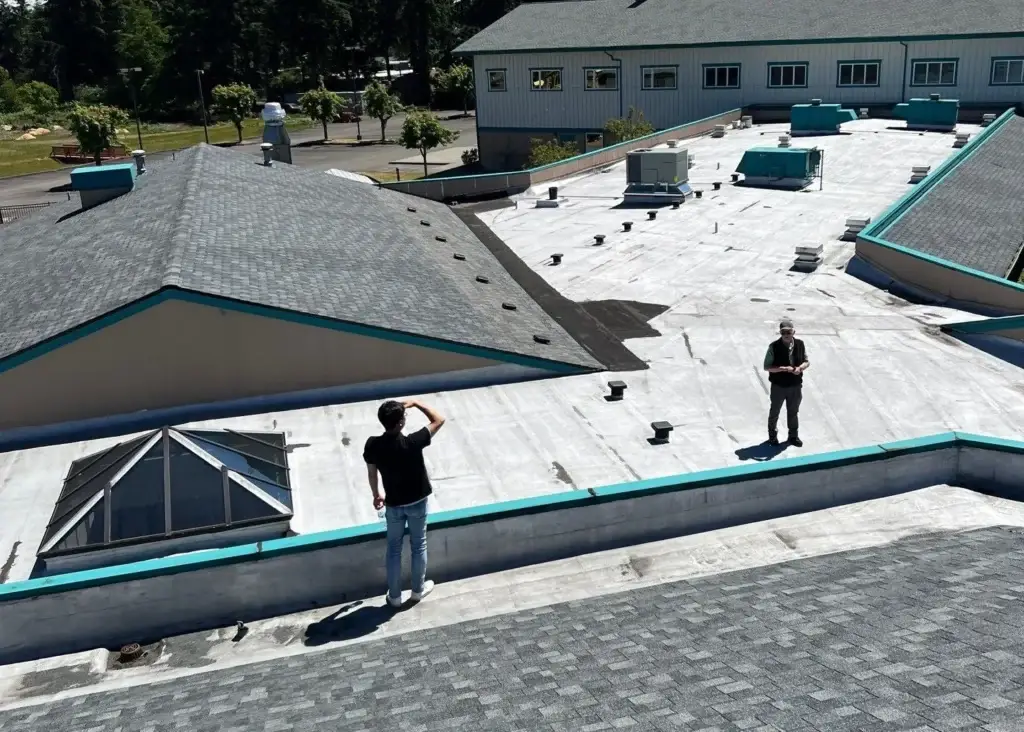
October rainstorms bring heavy moisture to low-slope commercial buildings in Puyallup. Continuous autumn downpours create deep pools of standing water on flat roofs across the region. Facility owners must work with skilled commercial flat roofing contractors near you to secure building tops before heavy rains cause major structural damage.
Trapped rainwater adds significant weight to commercial roof membranes. Every inch of standing water adds about five pounds of load per square foot. Our professionals evaluate low-slope roofs after major storms to locate blocked drainage paths and sagging structural panels.
Hazards of Autumn Water Ponding on Low-Slope Roofs
Low-slope commercial roofs rely on continuous gravity drainage to clear rainwater during persistent storms. Flat roof surfaces often form low spots where water collects for days after heavy rains. Water remaining on a flat roof for longer than forty-eight hours creates official ponding conditions that weaken membrane coatings.
Unmanaged standing water poses serious physical risks to industrial and commercial structures. Heavy ponding strains structural roof decking and degrades protective membrane seals over time. Standing water also speeds up seam decay across low-slope roof systems.
- Water weight causes structural roof decking to sag and bend under added loads.
- Stagnant pools break down protective UV coatings and speed up chemical degradation.
- Deep ponds expand into micro-cracks during cold snaps and split surface seams.
- Moisture surrounding roof penetrations rusts steel fasteners and rots insulation boards.
Do It Right Roofing identifies these vulnerable points during seasonal commercial building inspections. Our experts calculate drainage capacity and measure structural slope angles to keep rainwater moving off the roof.
Resolving Standing Water and PVC Seam Stress on Commercial Roofs
Polyvinyl chloride roof membranes offer strong chemical resistance for modern commercial properties. Constant water pooling along heat-welded seams still tests the material limits during heavy Puyallup rainstorms. The comparison table below highlights how common commercial single-ply membranes handle long-term water contact and fall weather stress.
| Membrane Type | Water Ponding Resistance | Seam Joining Method | Fall Weather Durability |
| PVC Membrane | Superior resistance to chemical breakdown and ponding water | Hot-air welded seams form a single continuous sheet | Excellent performance in heavy rain and oil exposure |
| TPO Membrane | Good resistance to standing moisture when installed flat | Hot-air welded seams require proper temperature control | Strong resistance to puncture and thermal expansion |
| EPDM Rubber | Moderate resistance to standing water over long periods | Adhesive or tape seams vulnerable to moisture breakdown | Flexible in cold weather but susceptible to seam leaks |
Thermal Seam Welding and Moisture Barrier Strength
Heat-welded seams on PVC commercial roofs create a physical bond stronger than the membrane sheet itself. Water sitting on top of poorly welded seams slowly penetrates minor gaps under heavy hydraulic pressure. Our professionals re-weld aged seams using hot-air equipment to restore complete water resistance across flat commercial surfaces.
Drain Clearance and Internal Plumbing Performance
Commercial flat roofs require clear primary drains and secondary scuppers to clear heavy rain volumes. Leaves and roof debris block internal drain bowls during October storms, causing water to pool across large roof sections. We clean drainage pathways and install heavy-duty strainer domes to keep water flowing off your building.
Professional Maintenance Protocols for Fall Rain Readiness
Protecting a commercial facility from heavy fall rain requires structured, professional service. Facility managers should follow an established maintenance strategy to catch small roof defects before wet weather arrives.
- Perform detailed visual inspections of all perimeter flashings and expansion joints.
- Clear leaf build-up and organic debris from all scuppers and drain strainers.
- Verify that heat-welded seams around HVAC curbs and pipes remain tightly sealed.
- Measure roof slope deflection near center spans to check for structural sagging.
Our team performs complete roof surface audits to prepare local facilities for continuous seasonal downpours. We restore compromised drain sumps and repair worn membrane laps using commercial-grade material standards.
Further Reading:
- Exposed Roof Decking: Protect It Before Autumn Winds Cause Severe Damage
- 5 Signs You Need Roof Repair from a Trusted Tacoma Roofing Expert
Securing Your Commercial Facility Against October Downpours
Persistent fall rain demands proactive care to protect commercial building assets from costly water intrusion. Proper drainage maintenance and seam inspections prevent structural damage before winter weather arrives. Do It Right Roofing provides expert inspections and repairs to keep your facility roof watertight.
Contact our team today to schedule your autumn roof inspection with top commercial flat roofing contractors near you.