

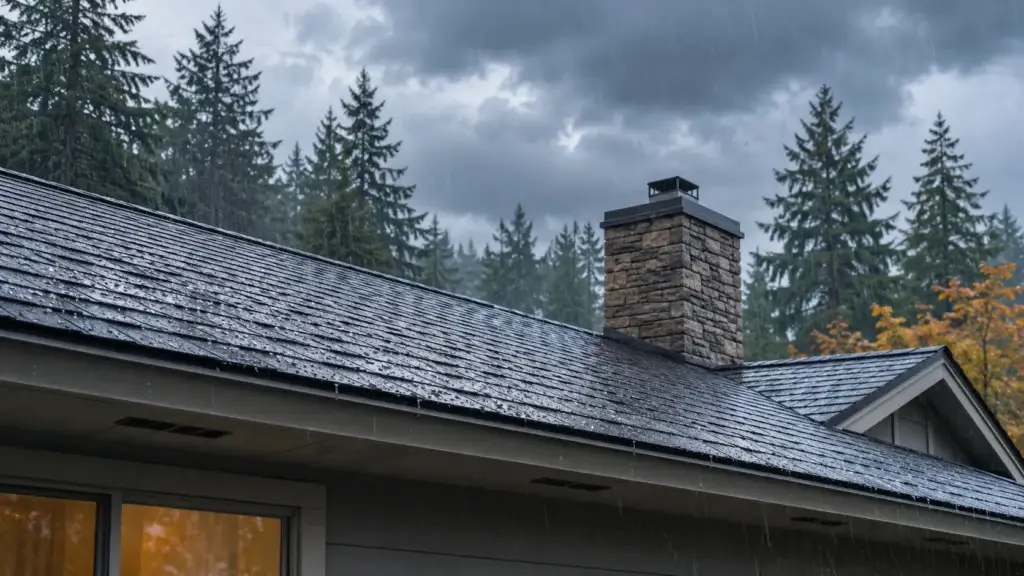
November storms bring harsh weather across the Puget Sound region each autumn. Fierce coastal winds drive heavy rainwater sideways underneath asphalt shingles on homes throughout Gig Harbor. Hiring a qualified storm-damage roof repair contractor helps property owners detect trapped attic moisture before water stains ruin interior ceilings.
Our professionals inspect roof spaces right after heavy weather hits the Kitsap and Key Peninsulas. Strong coastal wind gusts lift shingle edges and push water directly onto the underlying wooden decking. Do It Right Roofing stops this moisture before it rots structural timbers and destroys costly insulation.
Wind-Driven Rain Along the Gig Harbor Coastline
Puget Sound windstorms routinely produce gusts exceeding 50 miles per hour in late autumn. These heavy winds force rain upward against the natural slope of residential roof planes. Our team finds that water often slips past damaged shingle seals without causing any obvious exterior shingle loss.
Once rainwater slips past the exterior roof covering, it travels quietly across the roof underlayment. The water seeps through nail penetrations and saturates the attic floor decking below. We check these vulnerable transition zones to find moisture before it spreads across your entire home.
Peninsula wind patterns create intense pressure differences across roof ridges during coastal storms. These pressure changes suck moisture inward around plumbing vents, chimney flashings, and skylights. Our professionals inspect every roof joint to catch water infiltration before it weakens attic framing.
Cold November air prevents this trapped water from evaporating naturally. Damp, dark attics hold moisture against roof rafters and ceiling joists for weeks after a single storm. Our experts assess these spaces promptly so homeowners can avoid severe structural rot.
Locating a Trusted Storm Damage Roofing Team in Gig Harbor
Finding qualified help quickly protects your home from expensive structural damage after a severe gale. Professional crews follow strict protocols to uncover trapped moisture that property owners cannot easily see. Our experts rely on a detailed diagnostic process to evaluate every attic space after bad weather:
- Inspect Roof Sheathing with Moisture Meters: Our team checks the underside of plywood sheathing using professional pinless moisture meters. Moisture readings that exceed 19 percent signal immediate risks of fungal growth and structural decay.
- Scan Attic Insulation for Water Saturation: Saturated insulation loses its thermal resistance and traps cold moisture directly over finished ceilings. Our professionals probe deep into fiberglass batts and blown cellulose to identify hidden wet spots.
- Examine Rafters and Metal Fasteners: Water follows the downward pitch of rafters and collects around steel fasteners. We inspect these wooden framing members for dark water staining, mineral deposits, and rusted roofing nails.
- Check Soffit and Ridge Ventilation Ports: High winds often force driving rain inward through continuous soffit vents and ridge caps. Do It Right Roofing inspects all intake baffles and exhaust vents to ensure proper airflow without moisture intrusion.
- Document Damage for Insurance Filings: Our experts record exact moisture levels and capture clear digital photographs of every affected area. We prepare comprehensive damage reports so homeowners have clear documentation for their insurance claims.
Physical Moisture Thresholds and Attic Structural Hazards
Trapped stormwater creates serious building hazards within hours of entering an attic. Wood-decay fungi thrive when structural lumber moisture content stays above 20 percent. Our professionals track these exact moisture levels to prevent wood rot from weakening heavy roof trusses.
Airborne mold spores can germinate on wet cellulose and wooden surfaces in just 24 to 48 hours. When wet insulation sits against ceiling drywall, the material quickly loses up to 50 percent of its insulating capacity. Our team removes damp materials and dries the framing to prevent mold from spreading into living areas.
Long delays in water extraction cause attic ceiling drywall to sag and eventually collapse. Trapped dampness also corrodes electrical junction boxes, metal truss plates, and structural fasteners. We identify these moisture pockets early to protect your home’s safety and structural integrity.
Further Reading:
- What Puyallup Roofers Recommend for Durable Metal Roof Maintenance
- Why Lakewood Roofers Are a Reliable Choice for Long-Lasting Roofs
Protect Your Home from Hidden Attic Leaks
Do It Right Roofing helps Peninsula families protect their homes against harsh Pacific Northwest weather. Our team provides thorough attic assessments to catch hidden water leaks before structural decay spreads.
Contact our office today to schedule a detailed inspection with a trusted storm-damage roof repair contractor.