

Water staining on a ceiling is often one of the first visible signs that something is wrong with the roof. These stains may appear as discolored patches, faint rings, or darker areas that become more noticeable after rainfall. While the stain itself is visible indoors, the problem usually begins outside, where moisture is entering the roofing system. Understanding why these stains appear after rain helps clarify when roof leak repairs are needed and what typically causes water to travel into the home.
Do It Right Roofing works with homeowners across the service area to identify the source of roof-related leaks and determine whether the issue is localized or part of a broader repair need. Ceiling stains are rarely random. They usually point to specific roofing components that are no longer directing water away as intended.
How Water Reaches the Ceiling After Rain
Rainwater follows gravity, but it does not always travel in a straight line. Once water enters the roofing system, it can move along the roof decking, framing, or insulation before becoming visible inside the home. This is why the location of a ceiling stain does not always match the exact point where water entered the roof.
Moisture can travel from higher areas of the roof and settle at the lowest interior point before soaking through the ceiling materials. By the time staining appears, water may have already passed through several layers of the roof system. This delayed visibility often makes it difficult for homeowners to trace the source without professional evaluation.
Ceiling stains that worsen or expand after rain usually indicate an active leak rather than a past issue. This underscores the importance of prompt inspection once staining is noticed.
Common Roof Issues That Lead to Ceiling Stains
Several roofing components can allow water intrusion when they become damaged or degraded. Many of these issues develop gradually and only become noticeable once rainfall exposes the weakness.
Loose or missing shingles are a frequent cause. Shingles form the primary barrier against rain, and when they shift or detach, water can reach the layers beneath. Even a small area of missing shingles can allow enough moisture to create visible staining indoors.
Flashing problems are another common source. Flashing directs water away from roof transitions such as valleys, headwalls, and chimneys. When flashing becomes damaged, deteriorated, or improperly positioned, water may enter the roof system during rain events.
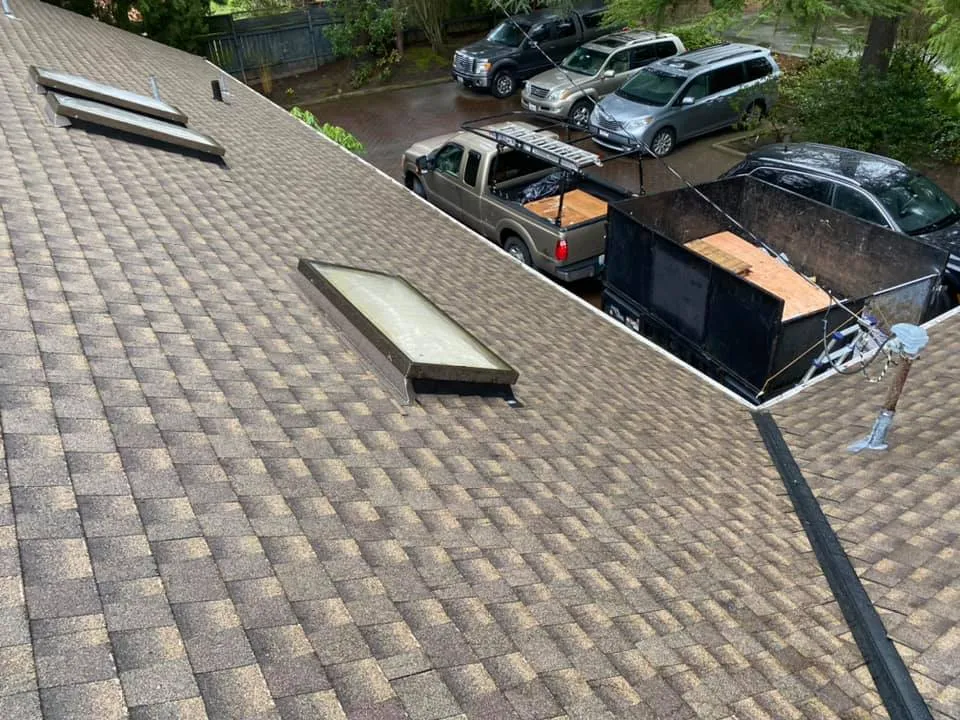
Roof vents and skylights are also potential entry points. These features penetrate the roof surface and rely on proper sealing to remain watertight. Over time, environmental exposure can affect how well these components perform, leading to leaks that show up as ceiling stains.
Why Ceiling Stains Often Appear After Heavy or Prolonged Rain
Short rain showers may not always produce visible leaks, especially if the opening is small. Prolonged or heavy rainfall increases the amount of water flowing across the roof, increasing the likelihood that moisture will seep through compromised areas.
During extended rain, water has more time to move beneath roofing materials and collect along seams or transitions. Once saturation occurs, moisture can pass through insulation and ceiling materials, resulting in staining. This is why some homeowners only notice ceiling stains after storms or periods of steady rain.
Moisture buildup in the attic can also contribute. Poor ventilation may allow humidity to linger, making ceiling materials more susceptible to staining when combined with roof leaks.
Why Ceiling Stains Should Not Be Ignored
Even if a ceiling stain appears minor, it often signals ongoing moisture exposure. Water intrusion can affect more than just surface materials. Over time, moisture can damage insulation, framing, and other structural components.
Ignoring ceiling stains allows the underlying issue to persist, increasing the likelihood that repairs will become more extensive. What begins as a small leak can expand as water continues to enter the roofing system during each rain event.
Addressing the cause early helps limit the scope of roof leak repairs and reduces the risk of further interior damage.
How Roof Repair Evaluations Identify the Source
When ceiling staining is reported, a roof repair evaluation focuses on identifying where water is entering and which components are affected. Not all leaks require full roof replacement. Many issues can be resolved through targeted repairs once the source is clearly identified.
Do It Right Roofing evaluates the following:
- Shingles for signs of movement or loss
- Flashing around chimneys, valleys, and roof transitions
- Roof vents and skylights for sealing or positioning issues
- Interior signs of moisture that help trace water paths
This process helps determine whether repairs can be limited to specific areas or whether multiple components require attention. The goal is to address the actual entry point rather than only treating the interior symptoms.
Further Reading:
- Why Roofing Systems in Tacoma WA Must Be Designed for Wet Weather Conditions
- The Role of Proper Maintenance in Preventing Rain Gutter Clogs in Tacoma
Addressing Ceiling Stains Caused by Roof Leaks
Ceiling stains after rain are a clear indication that the roof is no longer directing water away effectively in one or more areas. Identifying the source early helps prevent further damage and limits the extent of repairs needed. Do It Right Roofing provides repair services focused on identifying and correcting roof leaks based on observed conditions.
Contact Do It Right Roofing to schedule an inspection and discuss roof leak repairs.