

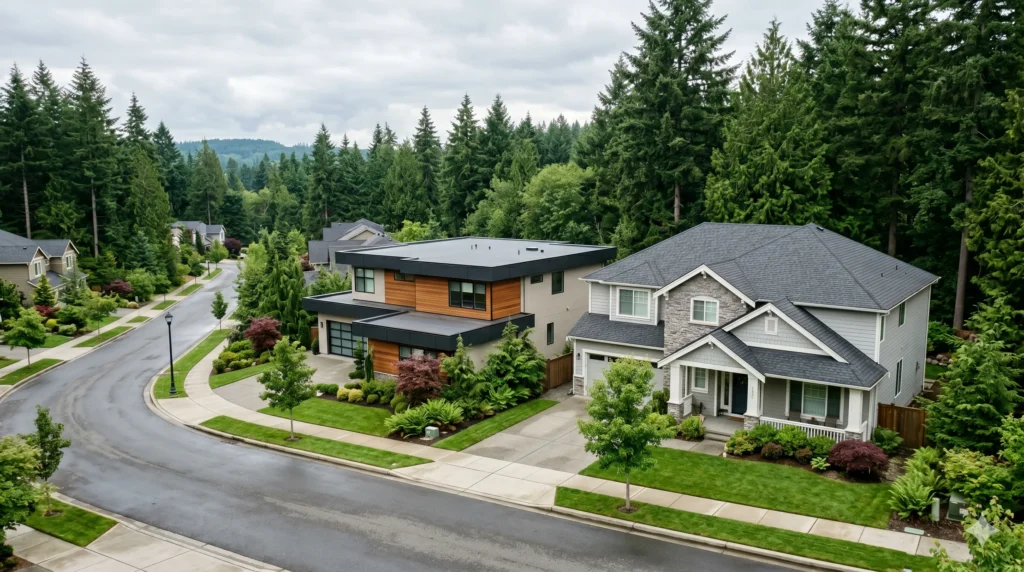
Selecting between a flat roof and a shingle roof comes down to your home’s structure, how you plan to use the roof, and the level of access you want for maintenance. As flat roof repair contractors, we regularly guide Bonney Lake homeowners in comparing these options based on design, function, and long-term performance.
Both options serve different purposes. Understanding how each roof type functions makes it easier to decide which one aligns with your property.
What Defines a Flat Roof
A flat roof is any roofing system with a pitch of 2:12 or less. This means the roof has a very slight slope, allowing water to drain while maintaining a nearly level surface.
Flat roofing systems may use single-ply membranes like TPO or PVC, SBS modified membranes, or metal options. Each material is chosen for its ability to perform reliably across wide surface areas.
Where Flat Roofs Are Commonly Used
Flat roofs are widely used on commercial properties because they efficiently cover large spaces. They are also becoming more common in modern residential construction due to their clean profile and practical design. Homes with contemporary architecture often feature flat roofs to create usable rooftop space or support equipment such as solar panels.
What Defines a Shingle Roof
Shingle roofs are built on pitched structures, usually with a slope above 2:12. Asphalt shingles are widely used in residential roofing because they suit sloped roof designs.
This type of roof relies on gravity to shed water quickly. The angle helps prevent standing water, which reduces certain types of wear over time.
Where Shingle Roofs Are Commonly Used
Shingle roofing is standard across many residential neighborhoods. It works well with traditional home designs and accommodates a wide range of layouts.
Homes with steeper rooflines benefit from the natural drainage provided by shingles, especially in areas with frequent rain.
Flat Roof vs. Shingle Roof: Key Differences
| Category | Flat Roof | Shingle Roof |
| Material Coverage and Efficiency | Covers large areas with fewer materials, making it practical for wide or low-slope layouts | Uses layered materials to support proper water-shedding on pitched roofs |
| Accessibility and Maintenance | A walkable surface allows easier inspections and routine upkeep | Limited access due to slope; maintenance often requires additional safety measures |
| Energy Considerations | Can contribute to more consistent heating and cooling performance; integrates well with certain energy-efficient solutions | Relies on attic ventilation and insulation to regulate indoor temperatures |
| Installation Flexibility | Supports easier addition of solar panels and rooftop features without major structural changes | Limits rooftop use due to slope; added systems require more planning |
Pros and Cons Comparison
| Category | Flat Roof | Shingle Roof |
| Pros | Covers more space with less material | Works well with sloped residential structures |
| Easier access for maintenance and inspections | Promotes natural water runoff | |
| Supports solar panel installation more easily | Common and widely recognized roofing style | |
| Allows use of rooftop space | ||
| Cons | Requires proper drainage planning | Harder to access for maintenance |
| Limited compatibility with certain traditional home designs | Less usable rooftop space | |
| Needs consistent upkeep to maintain performance | Installation depends on an adequate roof pitch |
How Bonney Lake Conditions Influence Your Choice
Local weather patterns and home design both influence which roofing system performs better. Bonney Lake homes experience steady rainfall, which makes proper drainage a key factor in roof selection.
Flat roofs must be installed with careful attention to drainage systems. When done correctly, they can perform effectively in wet conditions while offering practical benefits.
Shingle roofs handle rainfall through slope and runoff. This makes them a reliable option for homes already designed with pitched rooflines.
Choosing Based on Your Home’s Structure
The structure of your home often determines which roofing system is feasible. Flat roofs are best suited for homes designed with low-slope or modern layouts.
Shingle roofs are well-suited to homes with traditional framing that supports a steeper pitch. Converting between the two is not always practical, so the existing structure usually guides the decision.
Making a Practical Roofing Decision
Deciding between a flat roof and a shingle roof requires weighing design, accessibility, and long-term use. Each option can perform effectively when paired with the appropriate structure and installed properly.
Some homeowners prefer the accessibility and modern look of flat roofs. Others choose shingles for their compatibility with traditional home styles and natural drainage.
Further Reading:
- How Damaged Rain Gutters in Tacoma Can Lead to Costly Roof Repairs
- Selecting Family-Owned Roofing Companies in Tacoma WA for Reliable Workmanship
Choosing the Right Roofing System for Your Home
A properly selected roofing system improves overall function and makes maintenance more manageable. The best option depends on your home’s layout, how you intend to use the roof, and the level of access you prefer.
Do It Right Roofing provides inspections and guidance based on your specific property. Our team evaluates your structure and recommends options that align with your needs.
Contact Do It Right Roofing today to speak with experienced flat roof repair contractors and schedule your inspection.