

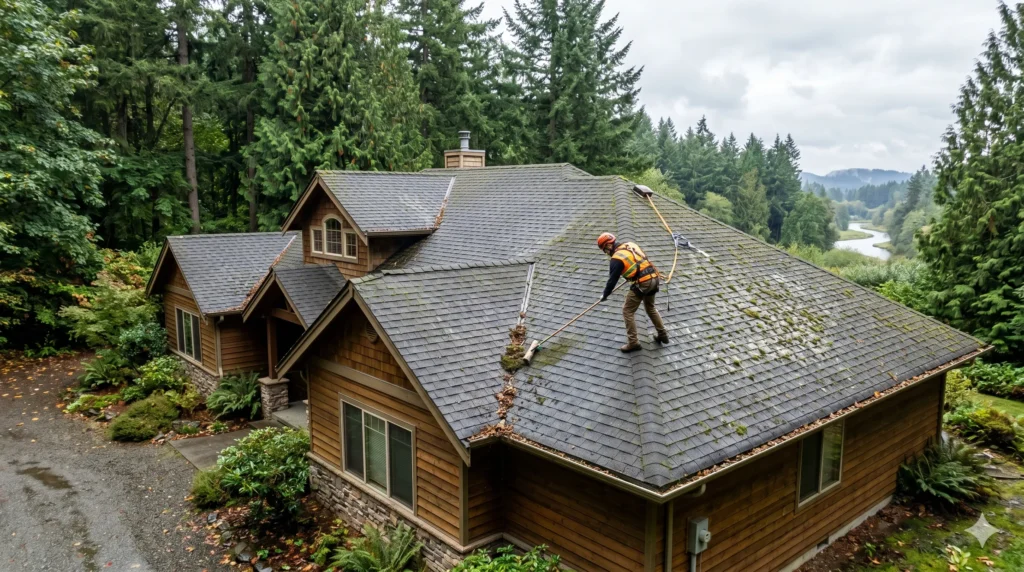
Seasonal shifts in the South Puget Sound bring steady rain, falling debris, and moisture that can build up across your roof. Keeping up with roofing maintenance services near you helps prevent common issues that develop when these conditions persist over time. Regular upkeep keeps your roofing system working as intended and reduces the likelihood of costly repairs.
Do It Right Roofing delivers organized maintenance that centers on cleaning, inspection, and early issue identification. This guide covers what to review each spring and includes a simple method to estimate inspection frequency based on your roof’s age.
Why Spring Maintenance Matters in the South Puget Sound
Moisture remains a constant factor in this region, especially after winter storms. Roof surfaces often collect leaves, twigs, and organic growth that trap water and slow drainage.
This buildup creates conditions that can affect shingles and underlying materials. Addressing these issues early in spring helps reduce strain on your roof before the warmer months arrive.
What to Include in a Spring Roofing Checklist
A thorough checklist keeps maintenance consistent and easier to manage. Each step supports the overall performance of your roofing system.
Clear Debris from the Roof Surface
Leaves, branches, and dirt collect in valleys and low points on the roof. These areas can hold moisture and block water flow.
Removing debris allows water to drain properly and reduces the risk of pooling that can affect roofing materials over time.
Address Moss and Algae Growth
Moss and algae grow easily in damp conditions and cling to roofing surfaces. As moss spreads, it can lift and separate shingles.
Do It Right Roofing removes moss using gentle brushing and air, followed by a treatment that helps limit future growth. This process helps protect the structure of your shingles.
Inspect for Early Signs of Wear
Routine inspections help identify minor concerns before they develop further. Look for areas where shingles appear lifted, cracked, or uneven.
Do It Right Roofing includes a detailed inspection as part of maintenance services. This allows potential repair areas to be identified without delay.
Check Drainage and Water Flow
Blocked drainage paths can cause water to back up across the roof. This may affect both the roofing surface and nearby components.
Clearing pathways and confirming proper flow help reduce the risk of leaks and keep moisture from lingering.
Annual Maintenance Calculator: How Often Should You Inspect Your Roof?
Not every roof requires the same maintenance schedule. A simple way to estimate inspection frequency is to consider your roof’s age.
Step-by-Step Logic
- 0–5 years old: Inspect once per year. Newer roofs still benefit from routine cleaning and debris removal.
- 6–15 years old: Inspect twice per year, once in spring and once before winter. Materials begin to show normal wear during this stage.
- 16–25 years old: Schedule inspections two to three times per year. Increased attention helps catch early signs of aging materials.
- 25+ years old: Inspect at least three times per year. Frequent checks help monitor areas that may require repair or replacement.
This approach keeps maintenance aligned with your roof’s condition. It also helps ensure that small concerns are addressed before they expand.
What Professional Roof Maintenance Includes
A structured service goes beyond surface cleaning. It combines removal, treatment, and inspection to support long-term performance.
Moss Removal and Treatment
Moss and debris are carefully removed using non-damaging methods. A treatment is then applied to help prevent regrowth. This step helps protect shingles from lifting or deterioration caused by organic buildup.
Full Roof Inspection
Each maintenance visit includes a review of the roof’s condition. Areas that show signs of wear are noted for follow-up. This process helps identify potential repairs early, reducing the likelihood of more extensive work later.
Siding Cleaning as Part of Exterior Care
Debris and algae often affect siding as well. Cleaning siding with low-pressure water and brushing removes buildup that can spread near roofing edges. A treatment is applied after cleaning to help maintain the condition of exterior surfaces.
Key Benefits of Consistent Roof Maintenance
Regular maintenance helps keep your roofing system functioning as intended. It also supports the condition of the surrounding components.
Extends Roofing Material Lifespan
Moss and debris can affect how shingles sit and perform. Removing buildup helps preserve the materials and their intended structure.
Reduces Repair Costs
Regular upkeep helps reduce the risk of larger problems forming. Handling small issues early can help avoid more involved repairs.
Improves Roof Performance
Algae can absorb heat, which affects how the roof manages temperature. Cleaning these surfaces helps maintain proper performance.
Helps Prevent Leaks and Drainage Issues
Debris can slow water flow and allow moisture to gather. Clear drainage paths help water move properly across the roof.
Preserves Manufacturer Warranty Conditions
Regular maintenance is often needed to keep warranty coverage valid. Consistent care helps keep materials in acceptable condition.
Further Reading:
- Fixing a Broken Roof Vent Replacement Before Summer Heat
- How Roof Repair in Tacoma WA Helps Address Persistent Leaks After Rain
Keep Your Roof Ready for the Season Ahead
Spring is a practical time to address buildup from months of rain and debris. A clear checklist and an age-based inspection schedule help keep maintenance consistent and effective.
Do It Right Roofing provides cleaning, treatment, and inspection services that help maintain roof condition and performance. Keeping to a regular schedule helps limit avoidable damage and supports proper function.
Contact Do It Right Roofing today to schedule roofing maintenance services near you.