
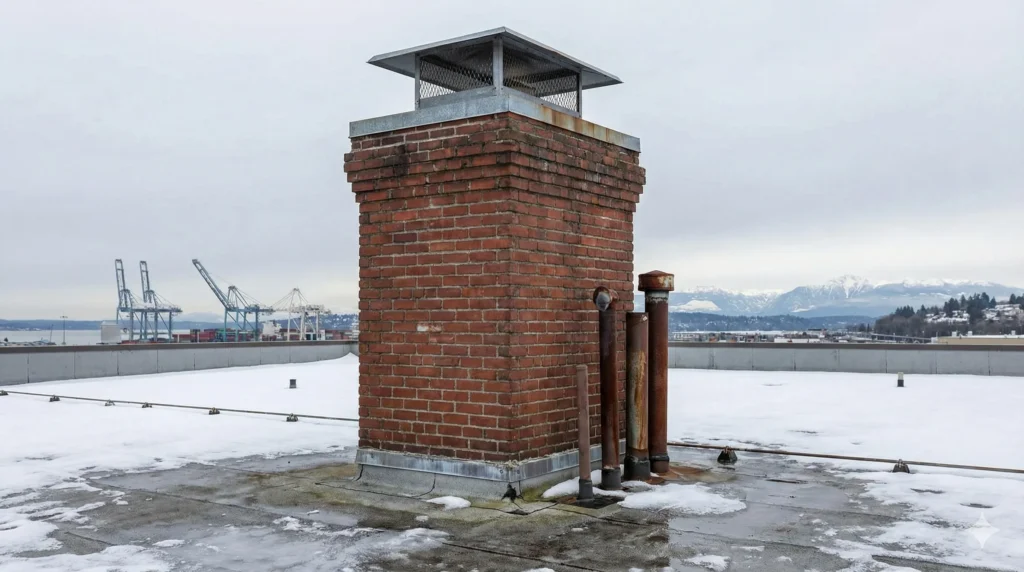
Commercial buildings in Tacoma face unique roofing challenges as winter approaches. Heavy rain, wind, and prolonged moisture exposure can increase stress on roof systems, especially around structural penetrations such as chimneys. Working with a roofer in Tacoma helps property owners address these vulnerable areas before winter conditions intensify. One of the most important components in protecting chimney areas is flashing, which directs water away from the roof structure.
Do It Right Roofing evaluates chimney flashing as part of comprehensive roof inspections for commercial properties. Chimneys disrupt the roof’s smooth surface, creating joints where materials meet, and water can enter if those joints are not properly sealed. Addressing flashing conditions before winter helps reduce the risk of moisture intrusion during the wettest months.
What Chimney Flashing Does on Commercial Roofs
Chimney flashing is a thin metal layer installed at the junction of the chimney and the roof surface. Its purpose is to create a watertight barrier that directs water away from the joint instead of allowing it to seep beneath roofing materials. On modern roofs, flashing is commonly made from aluminum or galvanized steel, though other materials may be used depending on the roof design.
In commercial settings, chimney flashing must handle larger roof areas and prolonged exposure to the elements. When flashing is intact and properly installed, it works quietly in the background to keep water moving where it belongs. When it fails, leaks often occur around the chimney.
Why Chimneys Are a Common Leak Source
Chimneys are among the most frequent sources of roof leaks because they introduce seams into the roofing system. Over time, flashing materials can deteriorate due to weather exposure, or sealants may degrade as temperatures fluctuate throughout the year.
Improper installation can also lead to issues. Flashing that was not correctly shaped, layered, or secured may allow water to bypass the barrier and reach the roof deck. In winter, wind-driven rain can exploit even small weaknesses, making chimney areas especially vulnerable.
Common Causes of Chimney Flashing Problems
Several factors can contribute to chimney flashing issues on commercial roofs. Deterioration over time is common, especially on older buildings where flashing materials have reached the end of their service life. Physical damage from nearby vegetation or animals can compromise the flashing’s integrity.
In some cases, flashing problems stem from installation errors rather than age. Poor alignment, insufficient overlap, or improper sealing can all affect flashing performance. Identifying the specific cause of a problem is essential before corrective work begins.
Winter Weather and Increased Risk Around Chimneys
Tacoma’s winter weather brings consistent rainfall and periods of strong wind. These conditions place additional stress on roof penetrations, including chimneys. Water that repeatedly flows against compromised flashing can penetrate underlying materials, potentially affecting insulation and interior spaces.
Addressing chimney flashing conditions before winter helps reduce exposure to these risks. Proactive evaluation allows property owners to resolve issues under more controlled conditions rather than responding to active leaks during adverse weather.
Inspection as the First Step Toward Reliable Flashing
A thorough inspection is key to determining whether chimney flashing is performing as intended. Inspectors assess the condition of the flashing material, the seal between the flashing and the chimney, and the flashing’s integration with surrounding roofing components.
Do It Right Roofing approaches chimney flashing inspections with attention to detail. Visible signs of wear, gaps, or corrosion help guide recommendations for repair or replacement. This process ensures decisions are based on observed conditions rather than assumptions.
Repair Versus Replacement Considerations
Not all chimney flashing issues require full replacement. In some situations, targeted repairs may address localized concerns. However, when flashing materials are extensively deteriorated or improperly installed, replacement may be the more appropriate option.
Replacing flashing involves removing the compromised material and installing new flashing that integrates correctly with the roof system. This approach helps restore the protective barrier around the chimney and supports long-term roof performance.
Commercial Roof Complexity and Chimney Details
Commercial roofs often differ from residential roofs in size, layout, and material selection. Chimney flashing on these roofs must accommodate these differences while maintaining proper water diversion.
Working with a roofer in Tacoma who is experienced in evaluating complex roof systems helps ensure chimney flashing is addressed within the broader context of the roof. This holistic approach supports consistent drainage and reduces the likelihood of isolated problem areas.
Further Reading:
- Enhancing Energy Performance in Commercial Roofs with an Auburn Roofer
- Ensuring Code-Compliant Leak Repairs with a Trusted Roofing Company in Tacoma
Preparing Chimney Flashing for Winter Conditions
Chimney flashing helps block moisture from entering commercial roof systems, particularly when Tacoma experiences extended periods of winter rainfall. Addressing flashing conditions before winter helps reduce the risk of leaks developing around one of the most vulnerable roof penetrations. Regular inspections and timely corrections enable property owners to approach the season with clearer insight into roof performance.
Contact Do It Right Roofing to schedule a winter inspection with a trusted roofer in Tacoma.