
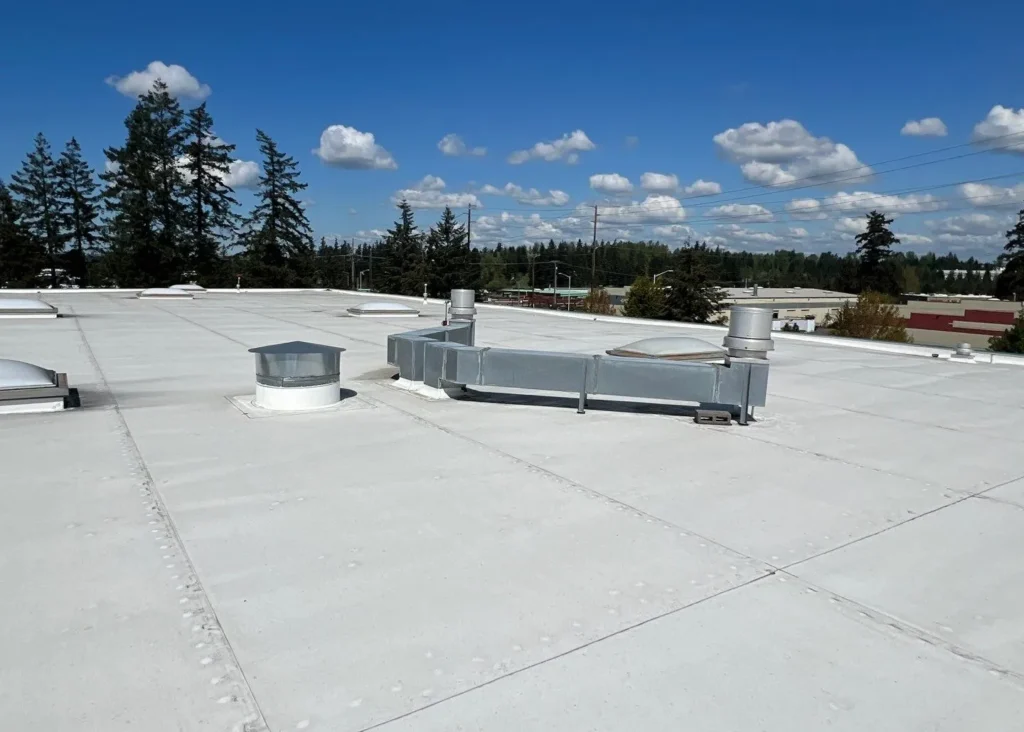
Commercial buildings across Washington often rely on low-slope roofing systems to cover large structures efficiently. These systems must operate in a climate characterized by prolonged rainfall, moisture exposure, and seasonal weather changes. Working with a trusted commercial roofing contractor in Tacoma helps ensure material selection and installation align with these regional conditions.
Do It Right Roofing installs flat roofing systems designed for commercial properties, including single-ply membranes such as TPO and PVC, as well as other low-slope solutions. These roof systems are commonly used for offices, warehouses, and industrial facilities where durability and accessibility are essential. Understanding how flat roofing performs in Washington’s environment helps business owners plan long-term maintenance and replacement cycles.
What Defines a Commercial Flat Roof
A flat roof is any roofing system with a pitch of 2:12 or less. This low slope allows water to move gradually toward drainage points while maximizing usable surface area. Commercial properties often benefit from this design because it covers large footprints with less material.
Flat roofs also allow easier access for maintenance and inspections. Equipment such as HVAC units or solar installations can be accommodated more efficiently on low-slope systems. This practical layout makes flat roofing a common choice for many commercial buildings.
Materials Commonly Used for Commercial Flat Roofing
Commercial flat roofing systems are available in several material types. Each option offers different performance characteristics depending on building requirements and environmental exposure. Selecting the right material involves evaluating durability, moisture resistance, and compatibility with the structure.
Single-ply membranes such as TPO, PVC, and EPDM are widely used for commercial applications. These materials are lightweight and designed for low-slope installations. Other options, including SBS modified membranes and metal roofing, may also be used depending on project needs.
TPO and PVC membranes are often selected for their resistance to moisture and surface exposure. EPDM remains a flexible option that performs well across temperature changes. The appropriate choice depends on building conditions and long-term planning.
Why Flat Roofs Work Well for Washington Commercial Buildings
Washington’s climate includes sustained rainfall and periods of high humidity. Flat roofing systems designed for these conditions help manage water flow effectively. Proper drainage and membrane performance become especially important during extended wet seasons.
Flat roofs also contribute to heating and cooling efficiency by allowing consistent insulation coverage. Large, unobstructed surfaces make it easier to manage temperature control. These features can benefit commercial buildings that operate year-round.
Low-slope roofs provide practical space for equipment installation. HVAC systems, ventilation components, and solar panels can be placed without major structural changes. This flexibility supports evolving building needs.
The South Puget Sound Flat Roof Lifespan Matrix
The following matrix compares common single-ply roofing materials for use in Washington’s humid environment. Performance depends on installation quality, drainage, and ongoing maintenance.
| Material | Moisture Resistance | Seam Performance | Flexibility in Temperature Changes | Typical Use on Commercial Buildings |
| TPO | Designed to resist water exposure | Heat-welded seams reduce moisture entry | Moderate flexibility | Offices, retail buildings |
| EPDM | Strong resistance to moisture | Adhesive or taped seams | High flexibility | Warehouses, industrial facilities |
| PVC | High resistance to standing water | Heat-welded seams | Moderate flexibility | Restaurants, manufacturing spaces |
This comparison helps illustrate how materials respond to the region’s humidity and rainfall. Final selection depends on building design and inspection findings.
Key Areas of Flat Roof Performance
Drainage plays a central role in the longevity of flat roofs. Because these roofs have minimal slope, water must be directed efficiently to drains or scuppers. Poor drainage can allow moisture to remain on the surface for extended periods.
Seams and penetrations are also critical. HVAC units, vents, and skylights create transitions where water can enter if not properly sealed. These areas receive careful attention during installation and inspection.
Membrane condition influences overall performance. Surface wear, punctures, or seam separation can affect water resistance. Regular evaluations help identify changes before they affect interior spaces.
Installation Considerations for Commercial Properties
Flat roofing installation involves preparing the substrate and ensuring proper insulation placement. The membrane is then applied in accordance with the selected system requirements. Seams are sealed using heat welding or approved bonding methods.
Drainage layout is reviewed during installation. This includes confirming that slopes direct water toward designated outlets. Proper alignment helps prevent water from collecting in low areas.
Do It Right Roofing evaluates roof components during installation to ensure compatibility. Attention is given to transitions, edges, and penetrations. This process helps maintain consistent membrane performance.
Further Reading:
- Maintaining Commercial Roof Performance Through Timely Vent Replacement in Puyallup
- Reasons Seamless Gutters Perform Better in Heavy Rainfall Areas
Planning for Commercial Flat Roofing Decisions
Flat roofing systems help commercial buildings across Washington manage large roof areas while accommodating equipment and drainage needs. Material selection, seam integrity, and proper water flow all influence performance in the region’s sustained rainfall and humidity.
Contact a reliable commercial roofing contractor in Tacoma to evaluate your commercial flat roofing system.