
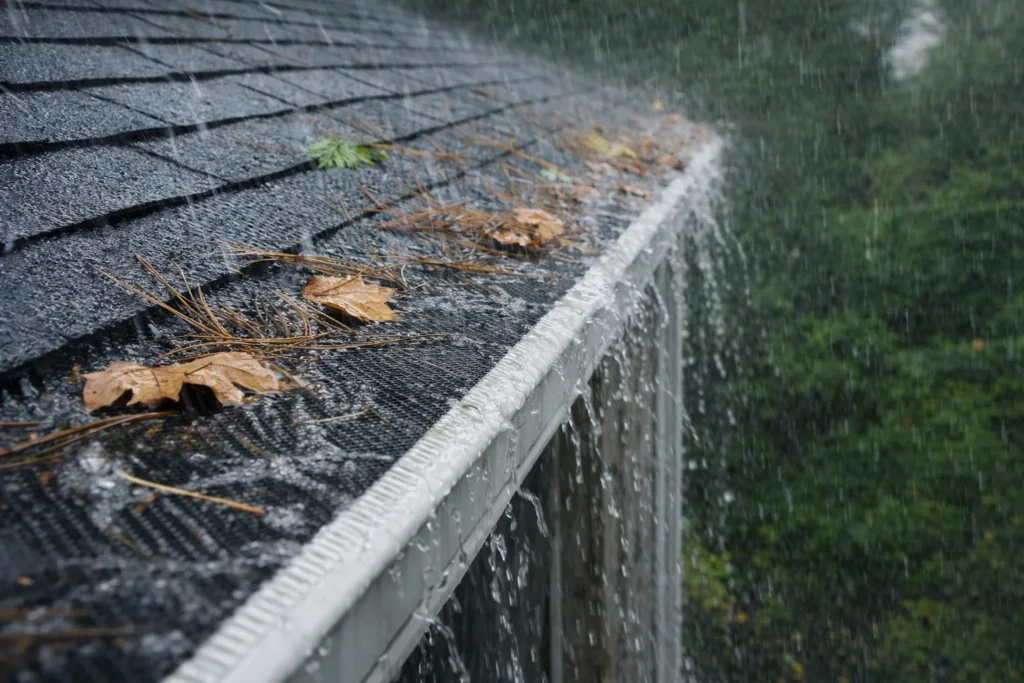
Washington’s rainy season puts steady pressure on every drainage system. Continuous rainfall combined with falling pine needles and leaves can quickly overwhelm unprotected gutters. Installing gutter guards helps reduce debris buildup and supports more consistent water flow during long stretches of wet weather.
Do It Right Roofing installs micro-mesh systems designed to protect gutter channels while still allowing rainwater to pass through. When properly fitted, these systems help maintain performance without interfering with drainage. Throughout extended periods of recurring storms, this added protection can significantly improve the consistency of gutter drainage.
Why Rainy Season Creates Challenges
In the Pacific Northwest, rain often arrives in sustained patterns rather than short bursts. Gutters must manage frequent runoff from the roof surface without becoming obstructed. When debris accumulates inside the channel, water movement slows and can back up.
Pine needles, leaves, and small twigs are common contributors to clogging. Over time, compacted material can block downspouts and restrict overall flow. During heavy rainfall, even minor obstructions can cause overflow at the roofline.
Rain can also wash granules and small particles from the roof into the gutter system. Without protection, this material settles to the bottom of the channel, contributing to the gradual narrowing of the flow path.
How Micro-Mesh Systems Work
Micro-mesh gutter guards consist of an aluminum frame topped with a stainless-steel mesh. The mesh is designed to block larger debris while allowing rainwater to enter the gutter channel below.
Because the openings are fine, leaves and pine needles are less likely to slip through. Water flows across the surface and into the system, reducing the volume of debris that settles in the gutters.
This design supports ongoing drainage during the rainy season, particularly in neighborhoods with dense tree coverage. It also helps limit the amount of organic material that can break down and create compacted blockages.
Performance During Heavy Downpours
One common concern is whether guards prevent water from entering during heavy rain. With proper installation, micro-mesh systems are set at the correct angle to guide rainwater efficiently into the gutter trough.
Instead of collecting debris inside the gutter, material tends to rest on top of the mesh where it can dry and be blown away or removed during routine maintenance. This reduces the likelihood of internal clogs forming during repeated storms.
Maintaining clear downspouts remains important, as water must exit the system efficiently. Guards primarily address the entry point of debris, supporting the overall function of the drainage network.
Reduced Cleaning Frequency
Gutter cleaning remains important, but micro-mesh protection can reduce the frequency of full debris removal. By limiting the amount of material that enters the system, guards help minimize buildup inside the channel.
Fewer internal obstructions can translate into more predictable water flow during extended rainfall. Homeowners may still schedule periodic inspections to confirm performance, especially after windstorms or heavy leaf drop.
Keeping the mesh surface clear supports optimal drainage. Light surface debris can typically be brushed or rinsed away without dismantling the system.
Supporting Proper Drainage
A key purpose of gutter guards during the rainy season is to help maintain a steady flow of water toward the downspouts. When gutters remain clear, rainwater can move through the system as intended rather than spilling over the edges.
Proper drainage helps direct water away from the roofline and foundation. By reducing internal blockages, guards help ensure a more reliable diversion system throughout the wet months.
Correct installation is essential to achieving these results. A poorly fitted guard can restrict water entry or create uneven flow along the roof edge, which is why professional assessment matters.
Additional Practical Benefits
Beyond reducing clogging, micro-mesh systems can deter pests from nesting inside gutter channels. Leaves and debris often attract insects and small animals seeking shelter, especially during cooler months.
Guards also support homeowners who collect rainwater. By limiting debris inside the system, the water directed through downspouts may contain fewer organic materials.
Do It Right Roofing installs 5K and 6K seamless aluminum gutter systems and can evaluate whether a guard system complements an existing setup. Matching the right guard type with the correct gutter size helps maintain balanced performance.
Further Reading:
- How a Lakewood Roofing Contractor Enhances Gutter Protection with Seamless Gutter Guards
- Improving Energy Efficiency in Commercial Roof Systems with an Auburn Roofing Contractor
Maintain Gutter Performance Through the Rainy Season
Rainfall in Washington can be persistent, and unprotected gutters often struggle with recurring debris buildup. Micro-mesh systems are designed to block leaves and pine needles while allowing steady water flow during heavy rain. When properly installed and maintained, they support a cleaner, more efficient drainage system throughout the wet months.
Contact Do It Right Roofing to learn more about installing gutter guards.