
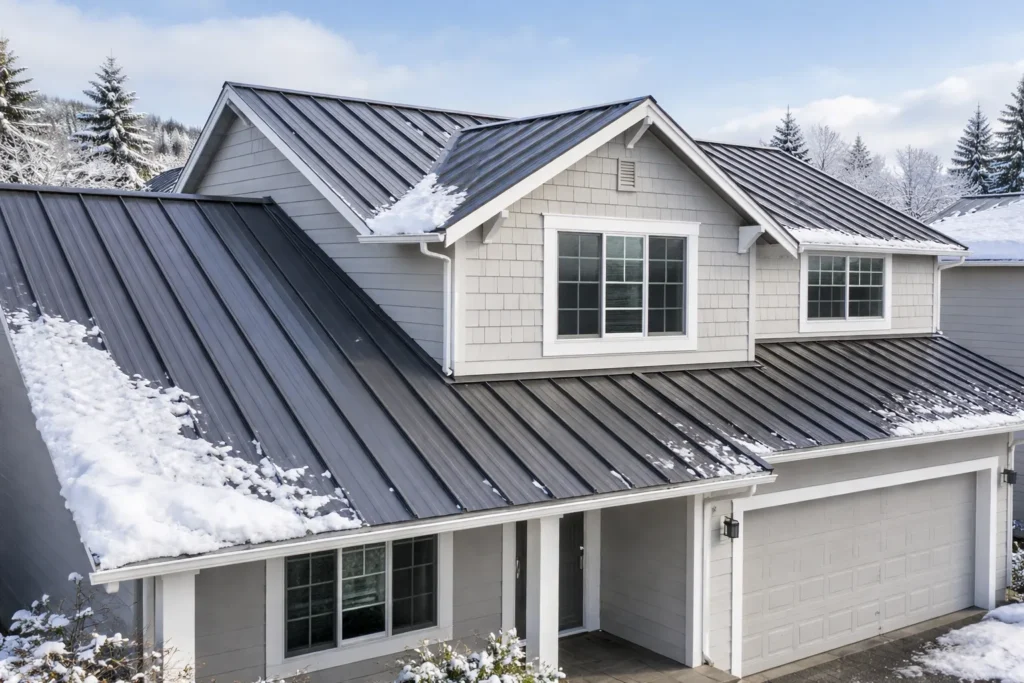
Cold rain, snow accumulation, and seasonal temperature swings define Washington winters. Homeowners evaluating metal roof installation often ask how these systems perform under sustained moisture and freezing conditions. When winter conditions place ongoing strain on roofing materials, a correctly installed standing seam metal roof is built to withstand consistent exposure to rain, snow, and temperature fluctuations.
Do It Right Roofing installs a wide range of roofing systems for residential and commercial properties, including standing-seam metal roofing. During a full roof replacement, we remove existing materials down to the deck, address any underlying damage, apply new underlayment, and install the selected roofing system to ensure proper moisture control.
How Winter Conditions Affect Roofing Systems
Washington’s climate exposes roofs to repeated cycles of rain, snow, and occasional ice. Over time, these conditions can wear down aging roofing materials and reveal weaknesses in underlayment or decking.
Heavy rainfall tests the roof’s ability to shed water efficiently. Snow accumulation adds weight, while freeze-thaw cycles can stress seams and fasteners if the system is not properly installed.
These seasonal factors make installation quality especially important. The performance of any roofing material depends on how well it is secured and integrated with moisture barriers beneath it.
Standing Seam Metal and Moisture Control
Standing seam metal roofing features raised seams that connect panels vertically along the roof slope. These seams help guide water downward and reduce the likelihood of water entering at panel joints.
When combined with proper underlayment applied during roof replacement, the system creates layered protection against moisture intrusion. Removing old materials down to the deck allows us to inspect and repair any compromised substrate before installing the new metal panels.
This preparation step is critical in winter-prone regions. Moisture that reaches the deck can contribute to long-term structural issues, so addressing underlying conditions during installation improves overall performance.
Snow Shedding and Surface Design
The smooth finish of metal roofing panels allows snow to shed more easily compared to many traditional roofing materials. On steep slope roofs, this design can help reduce prolonged snow accumulation.
Reduced snow buildup reduces the likelihood of standing moisture on the roof surface. However, proper installation remains essential to ensure panels are securely fastened and aligned.
Because steep-slope roofs are common on residential properties, standing-seam metal systems are often selected for their durability and streamlined design. Correct fastening and seam placement help maintain system integrity during winter storms.
Durability Under Seasonal Stress
Washington winters can expose roofing materials to debris, wind, and moss growth. Over time, aging roofs may show signs such as sagging, surface deterioration, or moisture intrusion.
A full roof replacement provides the opportunity to remove worn components and install a new system built to handle seasonal conditions. During this process, we inspect the deck substrate and make necessary repairs before installing new underlayment and metal panels.
This approach ensures that the metal roofing system rests on a stable foundation. Performance in winter depends not only on the visible panels but also on the integrity of the layers beneath them.
Energy Efficiency and Safety Considerations
Standing seam metal roofing is recognized for its energy-efficient performance and environmentally conscious design. These characteristics can be valuable in regions with year-round fluctuating temperatures.
Metal roofing systems are also considered extremely safe for residential and commercial properties. When installed correctly, they form a secure covering that protects the building envelope from rain, snow, and ice.
Proper installation helps ensure that seams remain tight and panels remain securely attached during winter wind events. The system’s durability makes it a practical choice for property owners seeking long-term performance.
Determining Whether Replacement Is Necessary
Metal roof installation is part of a full roof replacement process. Deciding whether replacement is appropriate involves evaluating the age and condition of the current roofing system.
Indicators that a roof system may be nearing the end of its service life include surface wear, punctures, and ongoing leaks. While some leaks can be repaired, long-term water damage to the underlayment may persist.
When the roof shows widespread wear or structural concerns, replacing the entire system may be more effective than patching isolated areas. Removing all previous materials allows for a complete assessment and restoration of the roof assembly.
Why Installation Quality Matters in Winter
Winter performance is closely tied to installation practices. Panels must be aligned correctly, seams properly formed, and underlayment securely applied to prevent moisture intrusion.
We install standing-seam metal roofing as part of comprehensive roof replacements for both steep and low-slope roofs. Each project begins by stripping the deck of existing materials and addressing any damage before installing the new system.
By following a structured replacement process, we help ensure that the finished roof is prepared to handle Washington’s seasonal conditions.
Further Reading:
- Seamless Gutter Installation Services from a Reliable Auburn Roofing Contractor
- Ways Gig Harbor Roofing Services Address the Needs of Local Businesses
Metal Roofing Performance During Active Winter Weather
Metal roofing systems offer durability, energy efficiency, and strong moisture resistance when installed correctly. In Washington’s winter climate, proper removal of old materials, deck inspection, and underlayment installation are essential steps in building a dependable roofing system. Standing seam metal products can perform well under rain, snow, and temperature shifts when integrated into a complete replacement process.
Contact Do It Right Roofing to schedule an inspection and discuss professional metal roof installation.