
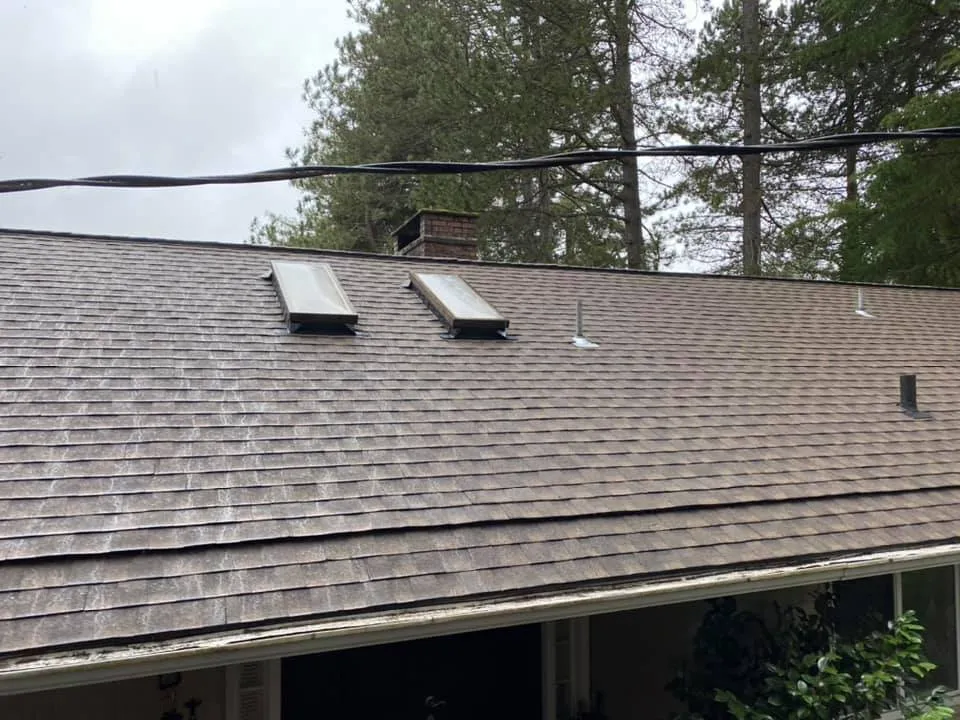
Seasonal debris and steady rainfall can place added strain on exterior drainage systems as winter winds down. Pine needles, leaves, and small branches often collect along rooflines and inside gutters, restricting water movement. Scheduling roof & gutter cleaning in late winter helps clear accumulated buildup before spring rainfall increases.
Do It Right Roofing provides professional gutter cleaning services designed to restore proper drainage and protect roofing components. In the Pacific Northwest, where rain and falling debris are common, routine cleaning is essential to maintaining roof performance.
Removal of Debris from Gutters
Professional service begins with removing all debris from the gutter channels. Pine needles, leaves, and sediment can compact over time, especially after repeated rainfall, forming dense clogs that obstruct water flow.
When gutters are blocked, rainwater cannot travel efficiently toward the downspouts. Instead, it may spill over the edges or back up along the roofline, increasing the likelihood of moisture exposure near fascia and soffits.
Clearing debris also reduces the weight strain placed on the gutter system. Wet organic material can become heavy, potentially stressing fasteners and brackets during extended rainy periods.
Clearing Downspouts of Clogs
Downspouts are inspected and cleared to ensure they are free from debris buildup. Even if the gutter trough appears clean, a partially blocked downspout can disrupt the entire drainage system.
Clearing these vertical pathways allows water to move continuously from the roof edge to the discharge point. This step is especially important in late winter, when heavy rainfall can quickly reveal hidden obstructions.
We also check for proper water exit at the base of the downspout. Confirming that discharge points are unobstructed helps prevent water from pooling near the foundation.
Performing Water-Flow Tests
After debris removal and downspout clearing, water-flow testing confirms that the system is operating correctly. Running water through the gutters helps identify any remaining restrictions or uneven flow patterns.
If water pools in certain sections, those areas can be further evaluated for adjustment or correction. Verifying proper drainage ensures that the cleaning process has restored full functionality.
Water-flow testing also highlights areas where gutters may have shifted slightly over time. Identifying these subtle issues allows us to confirm that water is directed efficiently along the entire roofline.
Collection and Disposal of Removed Debris
All removed debris is collected and disposed of as part of professional service. Material is not left behind on roofing surfaces or in surrounding landscaping.
Proper disposal prevents debris from washing back toward the home during future storms. Leaving the property clean after service demonstrates a thorough, organized approach to maintenance.
Maintaining a clear perimeter around the home reduces the risk of materials accumulating along the foundation or near pedestrian areas. A clean perimeter supports overall property upkeep.
Why Late Winter Cleaning Matters
Winter storms deposit debris gradually over several months. Small amounts of pine needles and leaves accumulate until gutters become partially or fully obstructed.
Late winter is an effective time to address this buildup before spring rainfall increases water volume. Clearing the system now reduces the chance of overflow when precipitation continues.
Homes located in densely wooded areas often require more frequent cleaning. Pine needles, in particular, can accumulate quickly and compact tightly in gutter channels, especially during prolonged wet conditions.
Protecting Roofing Components
Blocked gutters can affect more than the gutter system itself. When water backs up, it may reach the roof edge, fascia, and other adjacent components.
Maintaining clear drainage pathways helps limit prolonged moisture exposure around the roof perimeter. Routine roof & gutter cleaning helps preserve the condition of both gutters and nearby roofing elements.
Consistent drainage also reduces the likelihood of water collecting near seams and transitions. Keeping these areas dry supports the overall stability of the roof system.
Recommended Cleaning Frequency
Professional gutter cleaning is generally recommended at least twice per year. Properties surrounded by heavy tree cover may benefit from more frequent service due to rapid debris accumulation.
Discussing your property’s specific conditions with our team allows for a maintenance schedule that reflects local environmental factors. Regular cleaning helps prevent minor clogs from developing into larger drainage issues.
Maintaining a consistent schedule prevents debris from building up to the point where drainage becomes restricted. Addressing accumulation early helps keep the system functioning as intended.
Further Reading:
- Why a Port Orchard Roofing Contractor Is Well-Suited for Coastal Weather Conditions
- Reliable Tacoma WA Roofing Companies for Ongoing Commercial Property Maintenance
Keeping Drainage Systems Ready for Spring Rain
Late winter provides a practical opportunity to remove accumulated debris, clear downspouts, and confirm that water flows freely through the system. Removing debris before spring storms begin supports consistent drainage and decreases the likelihood of water spilling over near the roofline. Ongoing maintenance plays an important role in supporting overall roof performance throughout the year.
Contact Do It Right Roofing to schedule professional roof & gutter cleaning before spring rainfall increases.