
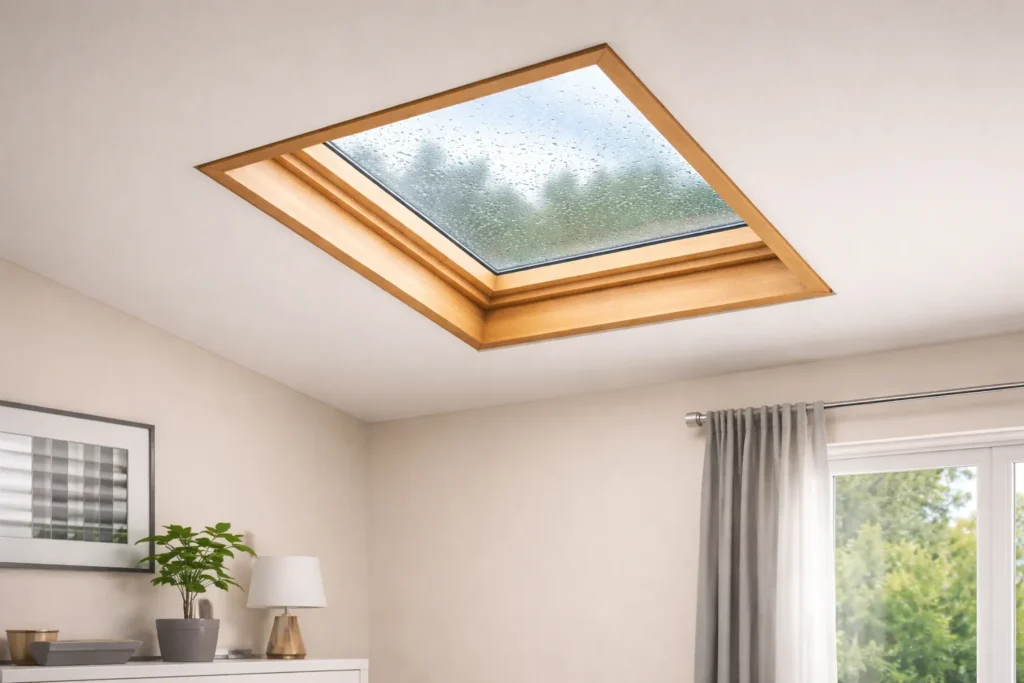
Natural light from a skylight can brighten interior spaces without sacrificing privacy. However, once seals, panes, or flashing begin to deteriorate, moisture intrusion can follow. Addressing problems early with professional skylight replacement helps prevent recurring interior water damage that may worsen over time.
Do It Right Roofing replaces aging and compromised skylights for residential properties throughout the region. Because skylights typically have a shorter lifespan than the roofing system, they may require attention well before a full roof replacement is necessary.
Why Skylights Are Vulnerable to Leaks
Skylights are roof penetrations, which means they rely on proper flashing and sealing to keep water out. Over time, exposure to rain, temperature changes, and UV rays can weaken these protective elements.
As materials age, small gaps may develop around the skylight frame. During steady rainfall, water can enter through these weak points and travel beneath surrounding shingles.
Since skylights sit directly within the roof structure, even minor failures can allow moisture to reach the attic or ceiling below. Addressing deterioration promptly reduces the likelihood of interior staining and damage.
Cold weather can further stress skylight components. Expanding and contracting materials may separate slightly, creating opportunities for wind-driven rain to reach vulnerable areas.
Signs That a Skylight May Need Replacement
Leaks at or near the skylight are often the most noticeable warning sign. Stains or damp patches near the skylight opening can signal that water has seeped through compromised flashing or worn seals.
Discoloration of the pane can also indicate aging or seal failure. If condensation consistently forms between glass layers, the insulated unit may no longer be functioning properly.
Visible cracks, warping, or surface damage to the pane signal structural concerns. Persistent condensation buildup inside the home may also suggest ventilation or seal issues.
While minor problems may be addressed with sealant or flashing repairs, older skylights often continue to deteriorate. In these cases, replacement can provide a more reliable long-term solution.
How Interior Water Damage Develops
When moisture enters around a failing skylight, it can affect more than just the immediate opening. Water may travel along the roof decking or framing before becoming visible inside the home.
Over time, repeated exposure to moisture can affect insulation and ceiling materials. Stains may spread or reappear after each rainstorm if the underlying issue remains unresolved.
Prolonged moisture exposure can also weaken surrounding drywall and trim. Replacing an aging skylight helps eliminate the recurring source of moisture intrusion and stabilize affected areas.
Proper installation ensures that flashing and surrounding shingles integrate securely with the new unit. This coordinated installation approach supports long-term resistance to water penetration.
Timing Skylight Replacement with Roof Work
Because skylights typically last 10 to 15 years, they may not align with the lifespan of a new roof. Reusing older skylights during roof replacement can create future maintenance concerns.
Replacing skylights at the same time as a roof installation helps ensure compatibility between materials. Integrating new skylights with fresh underlayment and shingles reduces the chance of leaks developing shortly after a roof upgrade.
Even when a full roof replacement is not required, replacing an aging skylight can prevent continued interior water issues. Evaluating both the skylight condition and the surrounding roofing components enables a coordinated approach.
Ventilated Skylights and Moisture Control
Many modern skylights are designed to open, allowing warm air to escape and helping reduce moisture buildup inside the home. Properly functioning ventilation features can contribute to indoor comfort during warmer months.
If opening mechanisms or seals fail, water intrusion may become more likely. Replacing compromised units restores both light and ventilation benefits without exposing the interior to moisture.
Ensuring that ventilation features operate correctly also supports balanced attic conditions. Coordinated airflow and proper sealing help maintain overall roof performance.
Professional Assessment Matters
Not every skylight issue requires immediate replacement. Minor flashing repairs or reapplication of sealant may resolve isolated concerns.
However, when skylights show signs of age, repeated leaks, or structural damage, replacement may be the more practical solution. A professional inspection helps determine whether repair or full skylight replacement is appropriate based on observed conditions.
Do It Right Roofing evaluates skylight condition carefully and recommends service based on the extent of deterioration. Replacing aging units reduces the likelihood of continued moisture intrusion during future rain events.
Further Reading:
- Selecting Metal Roof Replacement Services from a Tacoma Roofing Contractor
- What Tacoma WA Homeowners Appreciate Most in Metal Roof Services
Stop Recurring Moisture at the Source
Interior water damage often begins at roof penetrations that have reached the end of their service life. Aging skylights can repeatedly allow water to enter, leading to ongoing staining and deterioration inside the home. Replacing compromised units helps restore a secure seal and protect surrounding roofing components.
Contact Do It Right Roofing to schedule an inspection and discuss professional skylight replacement.